

building intercom installation nyc
Every apartment building in New York runs on its front door. Deliveries, guests, contractors, the super, the resident who forgot their keys — all of it moves through one panel that was probably installed before half the current residents moved in.
Impera Security Systems installs and replaces intercom systems for multi-tenant buildings across Manhattan, Brooklyn, and Queens — walk-ups, elevator buildings, prewar co-ops, new construction, and everything between. We handle the whole project: assessment, board proposal, wiring, installation, resident directory setup, and onboarding, with as little disruption to residents as possible. For single-family homes, offices, and smaller properties, see our full guide to intercom installation in NYC.
✓ Licensed & Insured
✓ Building Intercom Specialists
✓ Audio, Video & IP Systems
✓ Manhattan • Brooklyn • Queens
What a Building Intercom Needs to Do
A single-family doorbell and a 120-unit building intercom are different problems. Here's what we design for.
A directory residents can find themselves in. Scrolling, searchable, or touchscreen — the entry panel has to work for a delivery driver who's never been to the building and has thirty seconds to find apartment 4C.
Per-unit calling that actually reaches the resident. Whether that's an indoor monitor, a phone call, an app, or a combination, the call has to go to the right person every time, in every unit.
Reliable door release at every entrance. Front door, vestibule, side door, service entrance, garage, courtyard gate — each one wired correctly to the release hardware, and each one tested.
Simple tenant turnover. When a resident moves out and a new one moves in, updating the system should take minutes from a laptop, not a service call and a technician at the panel.
A record of who came in. Most modern platforms log every visitor call and many keep a snapshot or clip, which matters when a package disappears or an unknown visitor was let in.
Hardware that survives NYC. Weather, daily use, and the occasional kick. Metal panels, weather-rated components, and vandal-resistant mounting at street level.
How Residents Answer: Monitor, Phone, App, or All Three
This is the first decision for any board, because it shapes the equipment, the wiring, and the per-unit cost.
Indoor monitors
A screen in each apartment. Works without a smartphone, which matters in buildings with older residents or long-term tenants who don't want an app. Requires wiring or network to each unit — often reusable in prewar buildings.
App-based
Every call goes to the resident's phone. Nothing is installed inside apartments, which makes it the fastest, least disruptive option for large buildings and the simplest for turnover. Residents need a smartphone.
Telephone entry
Calls route to a landline or cell number. Low-cost, no in-unit hardware, no app required. Fewer features, but a practical fit for buildings where simplicity wins.
Mixed
Monitors in the units, app as backup, phone for the residents who want neither. Most platforms support this, and it's what we usually recommend for co-ops and condos with a range of resident preferences.
We'll walk the board through the trade-offs and recommend one configuration — with a clear explanation of why.
Built for NYC Building Types
Prewar co-ops and walk-ups. Plaster walls, limited conduit, and existing intercom wiring from decades ago. We test that wiring first — 2-wire platforms can often reuse it, which means no new cable runs to apartments and far less disruption.
Postwar and elevator buildings. Larger unit counts, multiple entrances, and often a lobby or doorman station that needs its own connection. We design for the building's actual traffic pattern.
Condos and rentals with high turnover. Cloud-managed platforms where the managing agent updates the directory from a browser and a departed resident's access ends the same day.
New construction and gut renovations. IP-based systems designed alongside the building's network and access control from the start, so nothing has to be retrofitted later.
Mixed-use buildings. Separate entry paths for residential and commercial tenants, with directory and release configured for each.
Replacing an Old Building Intercom
Most building intercom work in NYC is replacement, not new installation. The system is a buzzer-only panel from the 1980s, or a video system from the early 2000s that no longer gets parts. Apartments have been dropping off one by one. The super has a drawer of dead handsets.
Before we recommend anything, we evaluate what's already there — the entry panel, apartment stations, riser wiring, door-release hardware, power supplies, and network. That tells us what can stay and what has to go.
Existing wiring
Many older buildings already have wiring from the entrance to every apartment. If it's in good condition, we can often reuse it, which cuts new cable runs, wall openings, and — most importantly for a board — visits to individual apartments. We test before we promise.
Existing door hardware
Door strikes, conduit, panel locations, and power often carry over to a new system. We reuse what's sound and replace what isn't.
Phased installation
For larger buildings, we can phase the work — panel and common areas first, then apartments by floor or line — so the building is never without a working front door.
The result is a modern system that builds on the infrastructure already in place, with a clear plan for what stays, what goes, and what it costs.
Working With Boards and Property Managers
We've done enough co-op and condo projects to know how they actually get approved. Here's how we make it easier.
A proposal the board can vote on. Equipment, wiring, labor, scope, timeline, and per-unit pricing, laid out so board members who aren't technical can understand it and compare it.
Straight answers on options. If the board is weighing an app-only system against monitors, or two different platforms, we'll explain the real trade-offs — cost, disruption, resident experience, ongoing fees — rather than pushing the most expensive choice.
Resident communication. We provide notices for the building explaining the schedule, what residents need to do, and when we'll need access to apartments (if at all).
Coordination with the super and managing agent. One point of contact, a clear schedule, and no surprises.
Onboarding. We train the managing agent or board contact on the platform, and for app-based systems we help residents get set up so the switchover is smooth.
Intercom Platforms for NYC Buildings
We install and support the multi-tenant platforms with the strongest track record in NYC buildings.
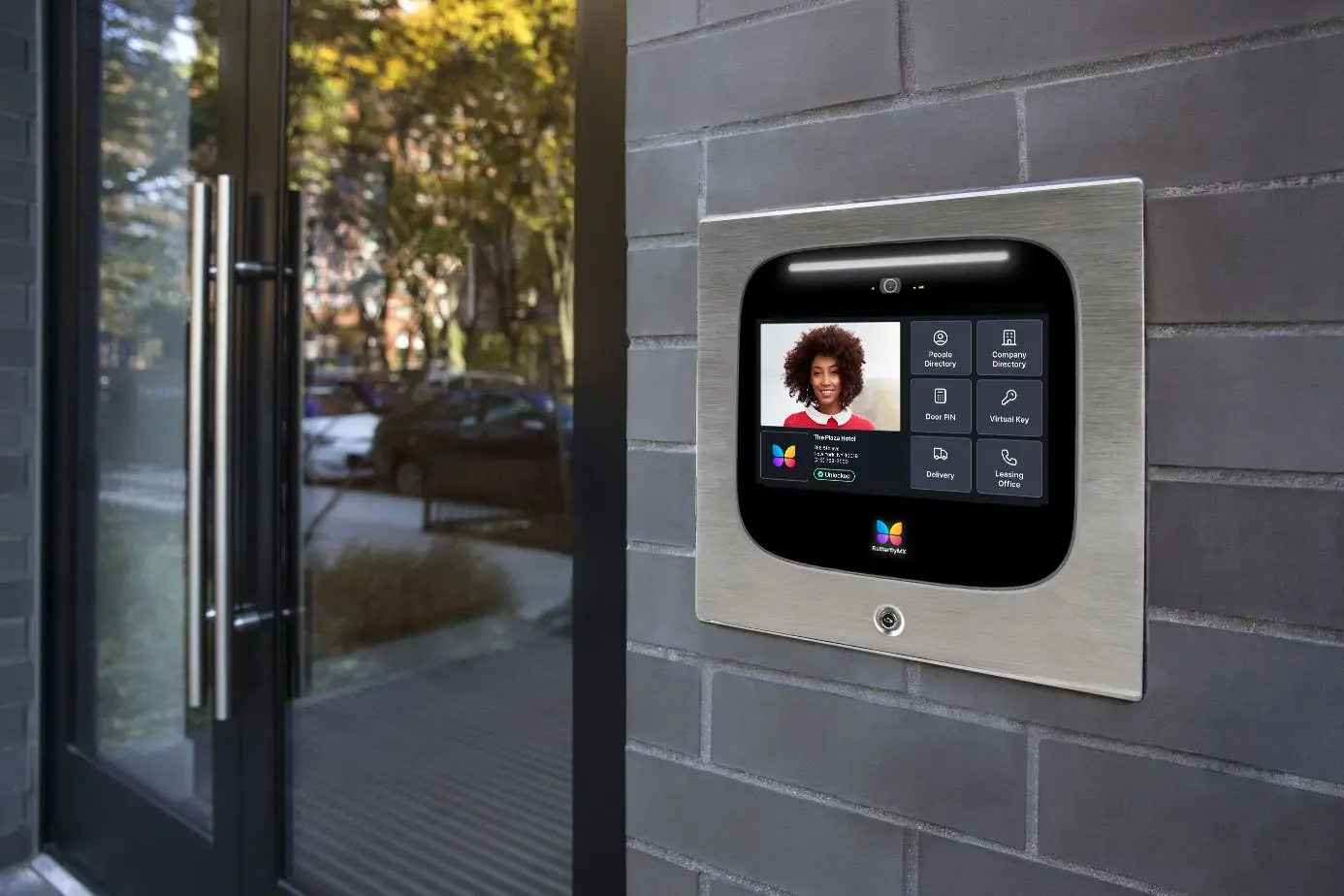
ButterflyMX— app-based, cloud-managed, the most widely installed in NYC apartment buildings
Comelit — monitors plus app, with 2-wire options that reuse existing prewar wiring
2N — IP-based systems for larger buildings and deep access control integration
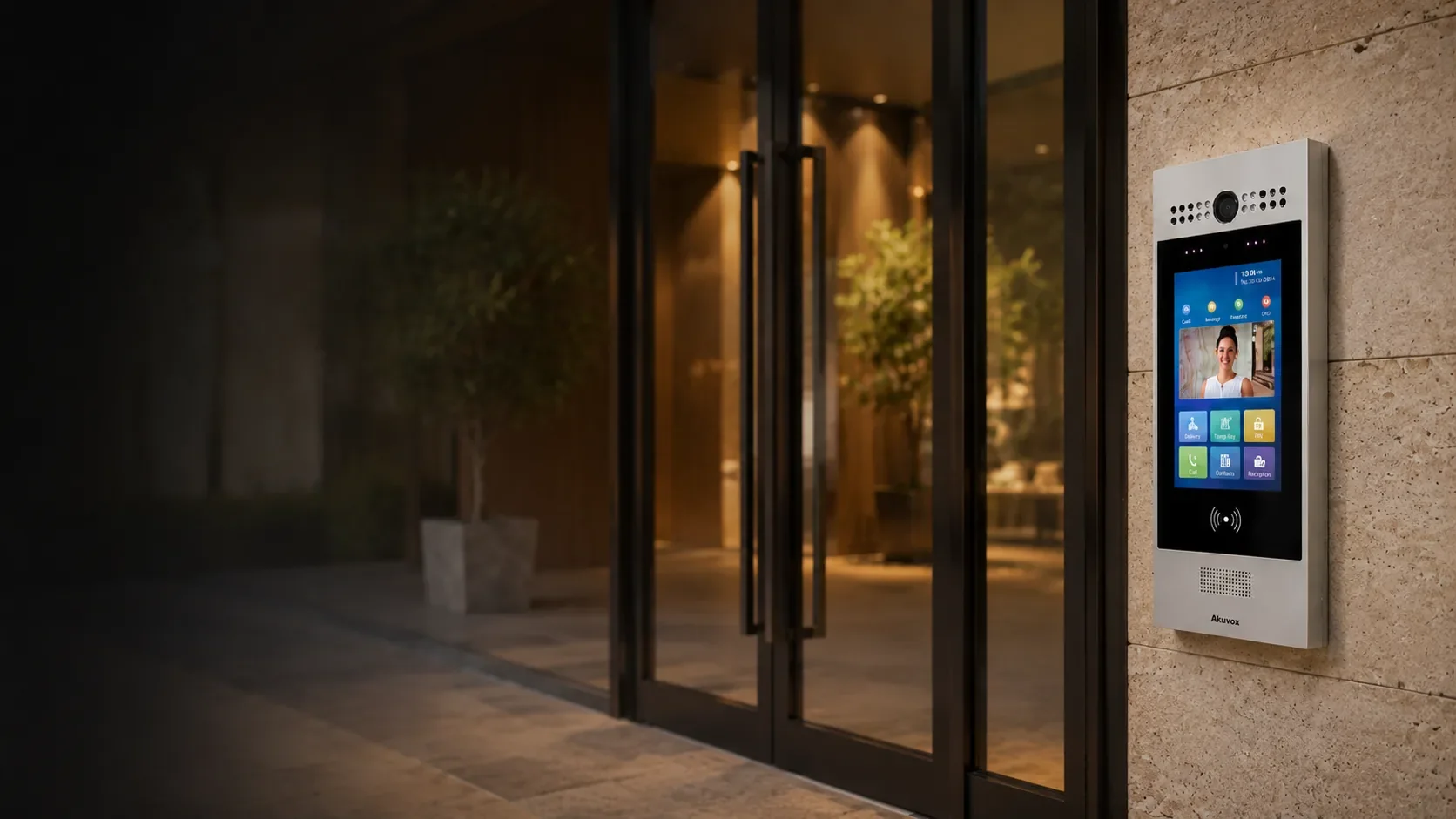
Akuvox — touchscreen panels and monitors for mid-size residential buildings
Aiphone — dependable audio and video systems without cloud subscriptions
Swiftlane — intercom and access control in one platform for newer buildings
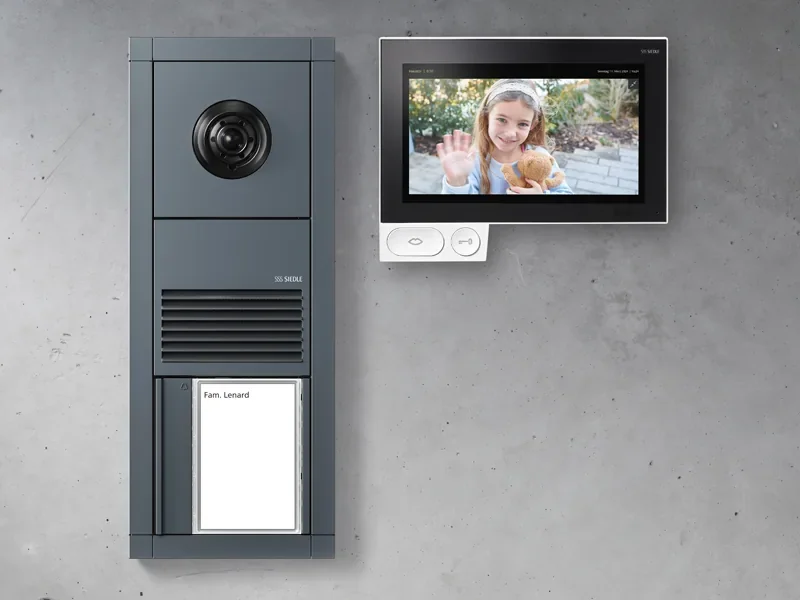
Siedle — premium entry systems for luxury residential
We're not tied to any one brand. We recommend the platform that fits the building's size, wiring, budget, and residents. For a deeper comparison, see our guide to the best intercom systems for multi-tenant buildings in NYC.
Works With Access Control and Cameras
For buildings that want residents to enter with a fob or phone and visitors to buzz in, we pair the intercom with access control— one of the most common configurations we install. Add security camerasand management sees visitor calls, credentialed entries, and video in one coordinated picture.
One entry system, one dashboard, one team to call.
Call (646) 450-8588 or Contact Us for Intercom installation, replacement, or repair in Manhattan, Brooklyn, or Queens.
What Our Clients Say
Trusted by property owners, managers, and businesses across NYC.
Frequently Asked Questions
-
It depends on the number of units, the platform, whether indoor monitors are included, the condition of existing wiring, and the number of entrances. Most multi-tenant installations fall between $1,500 and $6,500 for smaller buildings and scale with unit count; cloud-based platforms may also carry a per-building or per-unit subscription. After the assessment, the board receives a written proposal with clear pricing.
-
Only if the system uses indoor monitors and the existing wiring can't be reused. App-based and telephone-entry systems require no in-unit work at all. We'll tell you exactly what's needed before the project starts.
-
Small buildings are often completed in one to two days. Larger buildings with monitors in every unit take longer and can be phased so the front door is never out of service. The proposal includes a timeline.
-
Often. Prewar and postwar buildings frequently have riser wiring in good condition that 2-wire platforms can use. We inspect and test it before recommending an approach.
-
On cloud-managed platforms, the managing agent removes them and adds the new resident from a browser in minutes. No service call, no technician at the panel.
-
Yes. We train the managing agent or board contact at handoff and remain available for service, adjustments, and questions afterward.
Need a Building Intercom System?
Tell us about your building or project. We’ll review your requirements and recommend the right intercom system for your property.
CALL
BOOK ONLINE
SERVICE AREA
Manhattan • Brooklyn • Queens