

DoorBird Installer NYC
A three-unit brownstone in Park Slope has a problem a consumer doorbell can't solve: three households behind one door. A Ring or Nest rings one phone. It can't call the parlor floor for the parlor's guest, the garden apartment for the garden's delivery, and the top floor for the top floor's Uber Eats.
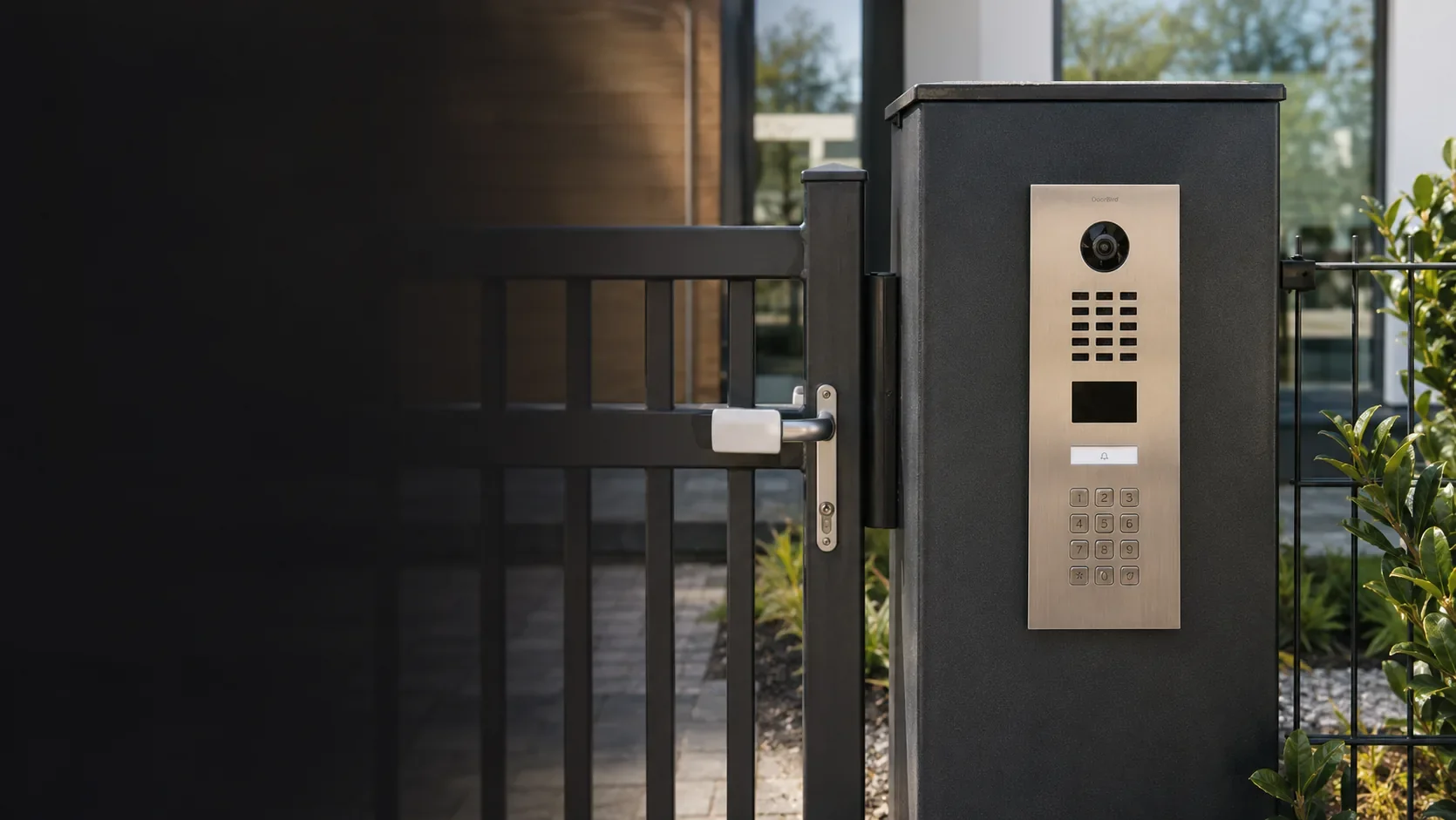
DoorBird can. It's a compact, professionally installed video door station that calls each unit separately — on a phone, a tablet, or an indoor screen — and releases the door from any of them. It mounts on the brick beside the door rather than on the door itself, it comes in finishes that don't fight a landmarked entrance, and it runs on the owner's own network with no subscription.
Impera Security Systems installs and services DoorBird across Manhattan, Brooklyn, and Queens. It's what we recommend for brownstones, townhouses, and two- to eight-unit buildings that want a real video intercom without a full apartment-building system.
✓ Licensed & Insured
✓ Certified Technicians
✓ Residential & Commercial
✓ Serving Manhattan • Brooklyn • Queens
Who DoorBird Is Right For
Converted brownstones and townhouses. Two, three, or four units behind one entrance, each needing its own call. DoorBird's multi-unit stations have a button or a keypad per unit and ring the right household.
Single-family brownstones and townhouses. Owners who want to see and speak with whoever's at the stoop, from home or away, and release the door — without a doorbell that looks like it belongs on a suburban house.
Small multi-unit buildings. Six- and eight-family walk-ups in Bed-Stuy, Astoria, or Sunset Park replacing a dead buzzer, where a full multi-tenant panel is more than the building needs.
Landmarked and historic entrances. DoorBird's compact stations, flush-mount options, and stainless, bronze, and custom finishes let the intercom sit on a historic facade without dominating it. We mount to brick or stone rather than the original door and woodwork.
Where it's not the best fit: buildings above roughly ten units, where a multi-tenant panel with a scrolling directory works better — see Comelit, Akuvox, or ButterflyMX.
DoorBird vs. Ring and Nest
This is the comparison most brownstone owners are actually making, so here it is directly.
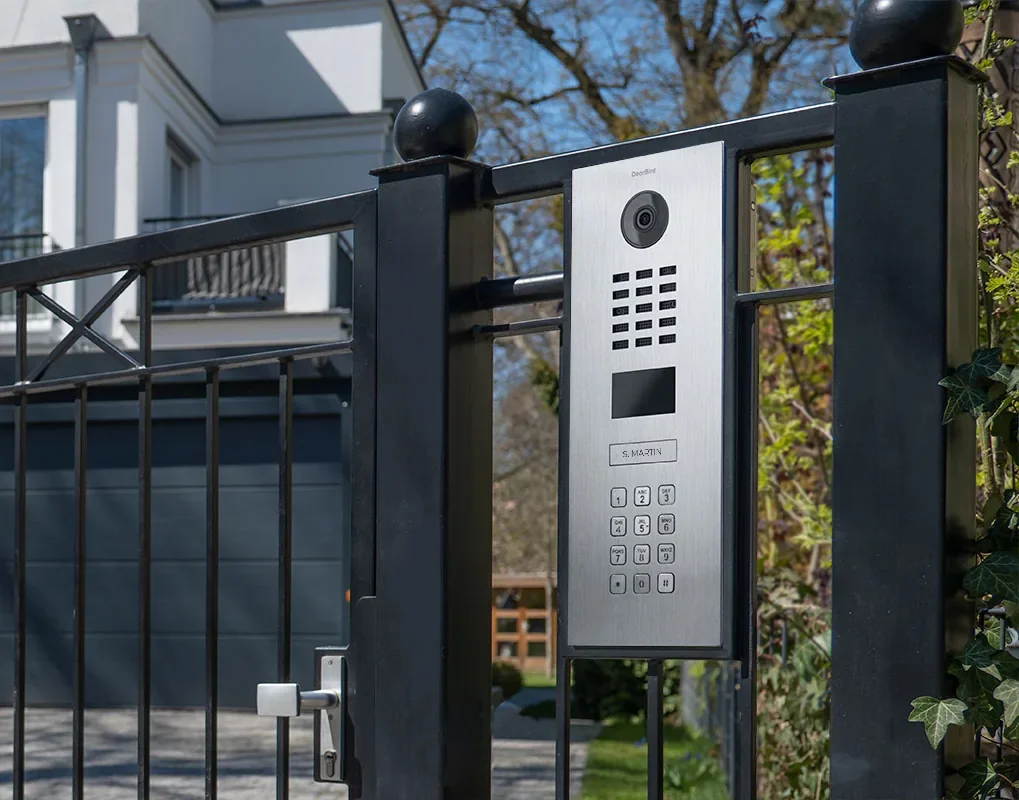
Multi-unit calling. Ring and Nest ring one account. DoorBird calls each unit separately. For any building with more than one household, that's the whole decision.
Door release. DoorBird is built to control an electric strike or maglock — it's an intercom, not just a camera. Consumer doorbells can trigger a smart lock on a single door, but they're not designed for a building's entry release.
Ownership. DoorBird records to your own network storage or its included cloud with no required subscription. Ring's useful features sit behind a monthly plan.
Installation. DoorBird is hardwired for power and network by a licensed installer, mounted to masonry, with the door strike wired by a locksmith. A consumer doorbell is a screw-on, battery-or-doorbell-wire device. On a landmarked stoop, that difference shows.
Where Ring wins: a single-family house, a renter who can't modify the entrance, or a budget under a few hundred dollars. If that's you, we'll tell you.
DoorBird Systems We Install
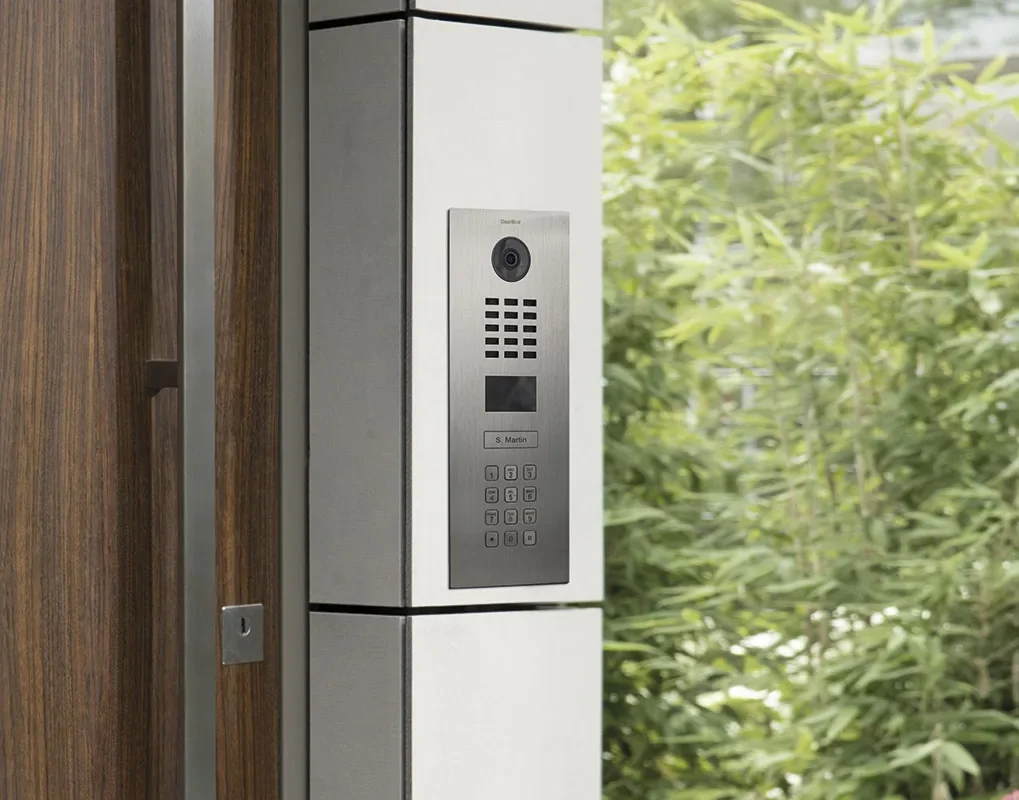
D1101V / D1102V — single-unit video door stations for a single-family home or townhouse. Flush or surface mount, camera, motion sensor, and app calling.
D2101V / D2102V / D2103V — multi-unit stations with one, two, or three call buttons for converted brownstones and small buildings, with the option of a keypad for code entry.
D21DKV and keypad models — for buildings that want a keypad for residents plus video calling for visitors.
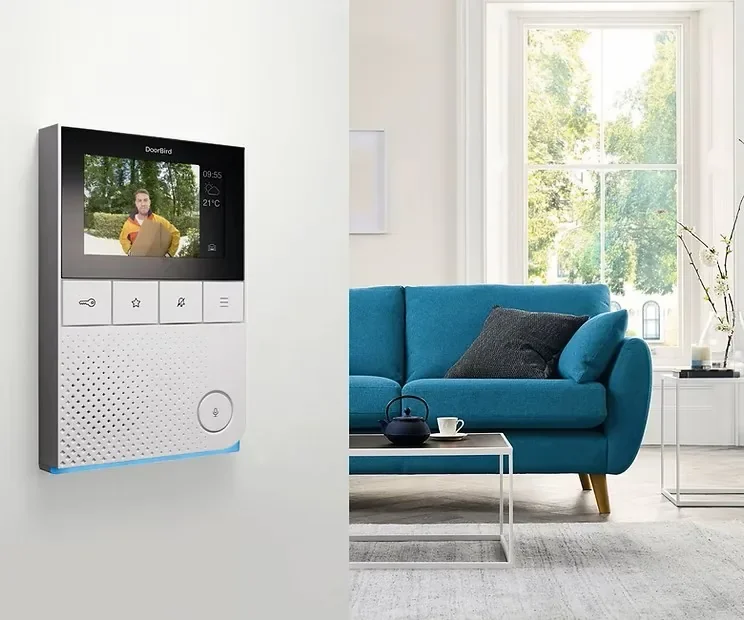
Indoor stations and integration. DoorBird's indoor video station for owners who want a screen on the wall, and integration with home automation systems and IP phones.
Custom finishes. Stainless, bronze, brass, and RAL colors for entrances where the standard finish won't do.
What a DoorBird Installation Involves
Placement and mounting. We choose a location on the brick, stone, or a mounting box beside the door — never drilled into original wood or trim — and flush-mount where the facade allows.
Power and network. DoorBird runs on PoE or a power supply plus network. We run the cable from the house's network closet or router to the entrance, concealed where possible.
Door release. We wire the station to an electric strike fitted to the existing lock — including period mortise locks on original doors, which our locksmith side handles — so the door releases from the app or the indoor station.
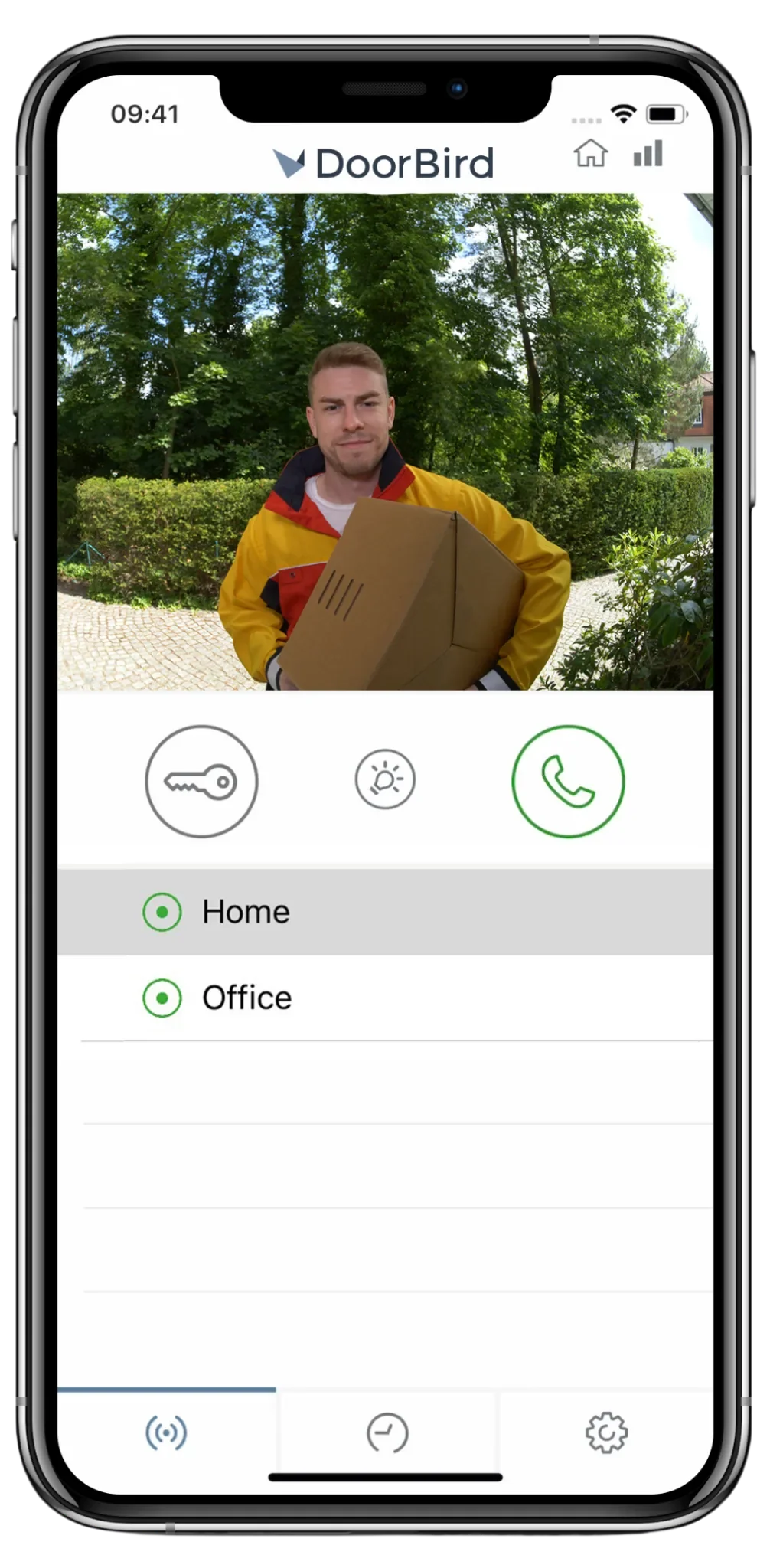
Per-unit setup. Each unit's residents get the app configured for their button; owners can add family members, a nanny, or a dog walker as users.
Timeline. Most DoorBird installations are one day.
DoorBird Installation Cost in NYC
A single-unit DoorBird for a townhouse typically runs $1,500–$2,800 installed, including the station, cabling, door strike, and setup. A multi-unit station for a converted brownstone or small building, $2,000–$3,500, with custom finishes and flush mounting adding to the upper end.
No subscription for calling, door release, or the app. DoorBird includes basic cloud recording; optional extended storage is available.
After the free assessment, you get a written proposal.
DoorBird Repair and Service
Already have DoorBird? We service it — stations that won't call, network and Wi-Fi connectivity, door release faults, app configuration, and firmware — whether we installed it or another company did.
Call (646) 450-8588 or Contact Us for DoorBird installation, replacement, or repair in Manhattan, Brooklyn, or Queens.
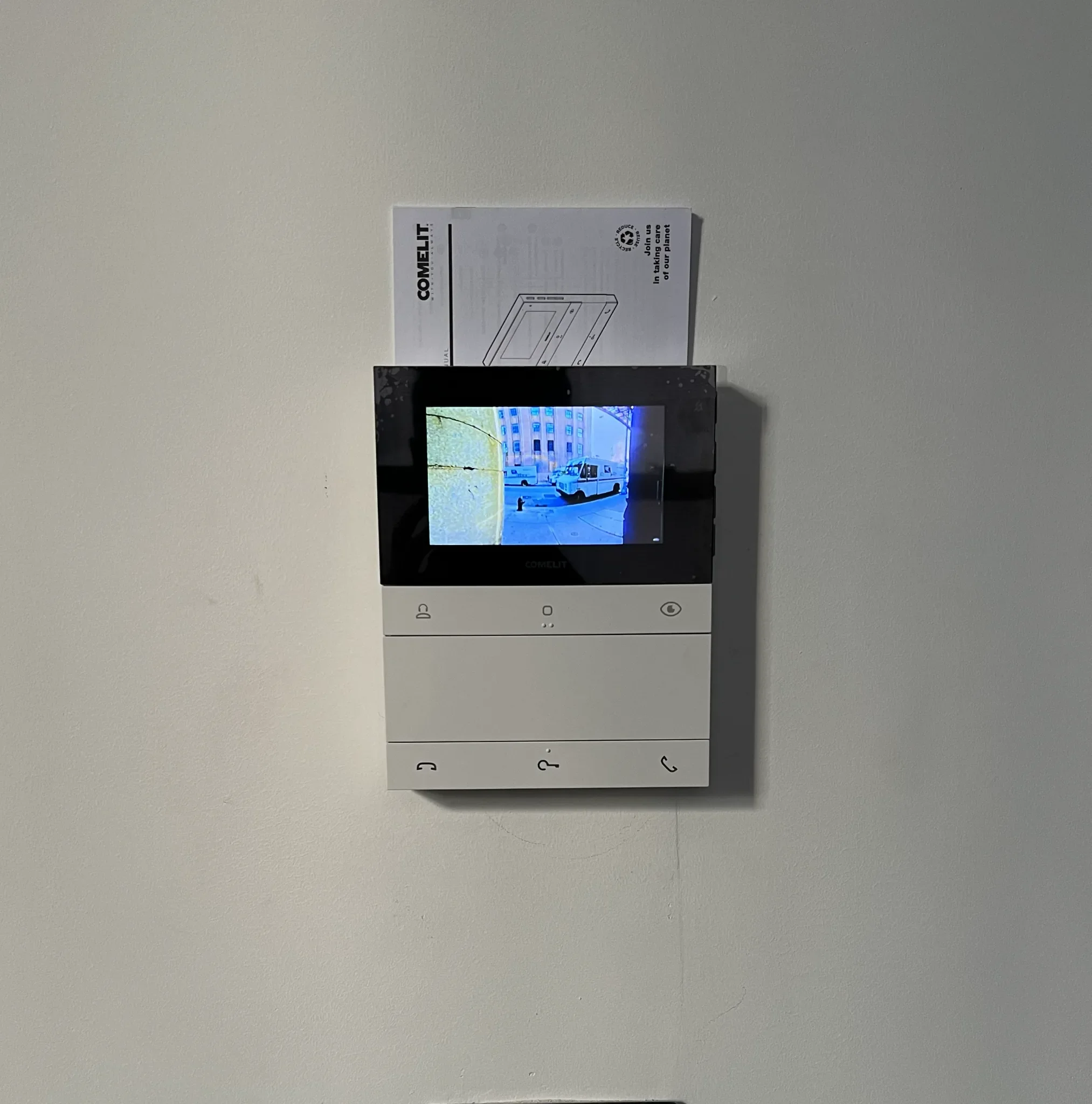
Recent DoorBird Installations in NYC
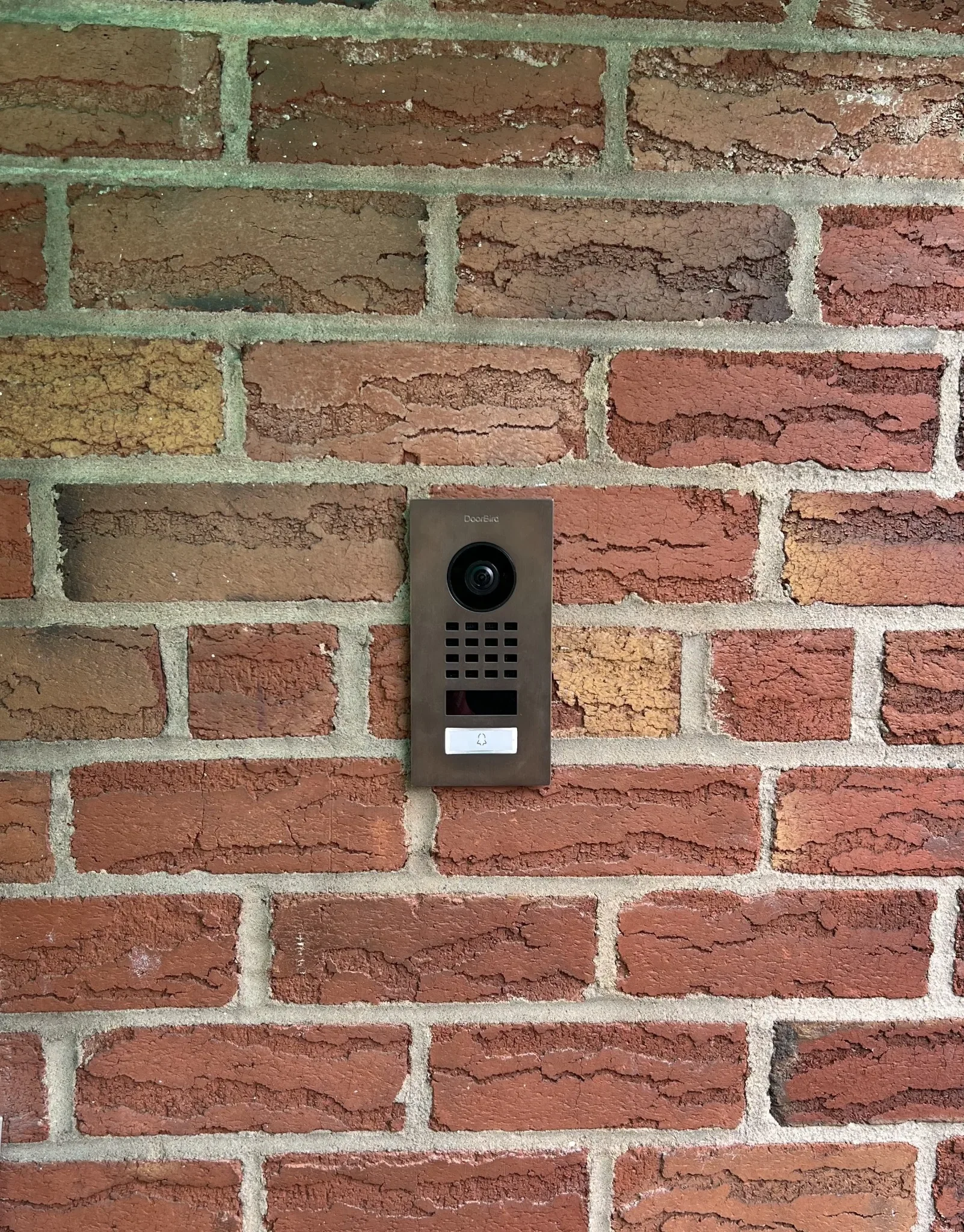
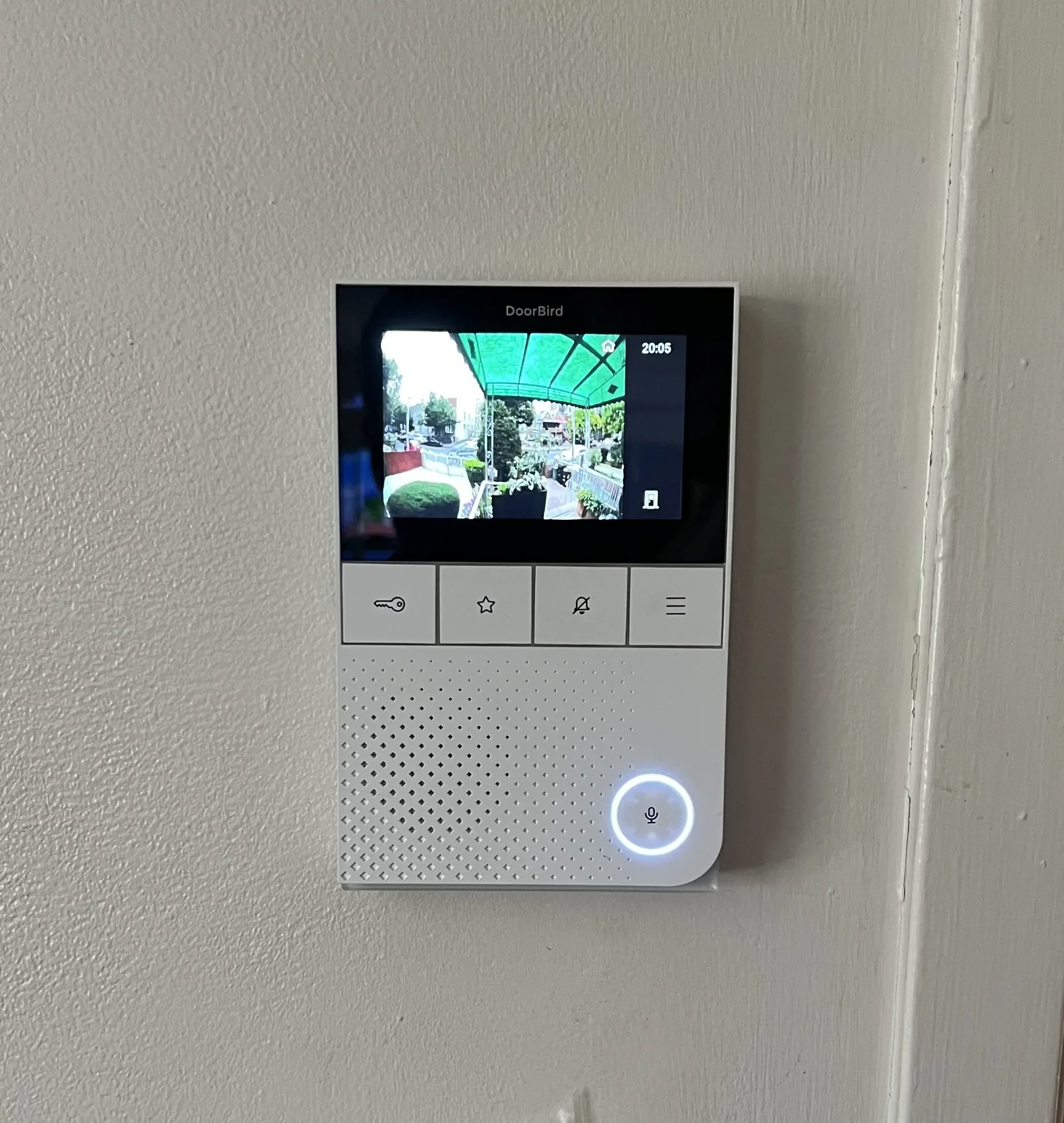
Every installation is completed to the same standard - clean cable management, properly configured hardware, and reliable systems from day one.
Frequently Asked Questions
-
Yes. The multi-unit models have a button per unit, and each rings its own residents' phones or indoor station.
-
No. Calling, door release, and the app work without a subscription. Extended cloud recording is optional.
-
Yes. We mount to masonry rather than original woodwork, use flush or compact stations, and choose finishes that suit the facade.
-
No. We hardwire the station for network and power, which is more reliable than Wi-Fi and what a permanent installation should be.
-
Yes. We fit an electric strike to the existing lock and wire it to the station. The door releases from the app or an indoor station.
-
It's designed for homes and small buildings. Above roughly ten units, a multi-tenant intercom with a directory is the better tool.
Get a Free DoorBird Assessment
Tell us about the house or building — how many units, what's at the door now, and whether the entrance is landmarked. We'll come out, look at the mounting and the lock, and give you a written proposal.
CALL
BOOK ONLINE
SERVICE AREA
Manhattan • Brooklyn • Queens